See the parts. Understand the whole.
One color for every prefix, one color for every suffix, and separate colors for verb Shorashim and noun Shorashim. Four ideas, and a beginner can start using them the same day.
שְׁמוֹת֙ בְּנֵ֣י הַבָּאִ֖ים
A color-guided Chumash that shows you the Shoresh and every piece attached to it — adding clarity and building skills.
Being created for the entire Chumash · Free to use · A new project for clearer Chumash learning
Every Shoresh. Every prefix. Every suffix. In color.
וְאֵ֗לֶּהAnd these are שםשְׁמוֹת֙the names of בןבְּנֵ֣יthe sons of יִשְׂרָאֵ֔לIsrael בואהַבָּאִ֖יםwho are coming מִצְרָ֑יְמָהto Egypt אֵ֣ת- יַעֲקֹ֔בYaakov אישאִ֥ישׁeach man ביתוּבֵית֖וֹand his house בואבָּאוּ :they came
Shemos 1:1
Hebrew words are built out of parts. Once a student can see where the Shoresh ends and the extra letters begin, a word that looked unfamiliar turns into one they already know.
Each word in the Chumash has already been broken into its Shoresh and every prefix and suffix attached to it — by hand, word by word, across all five Chumashim.
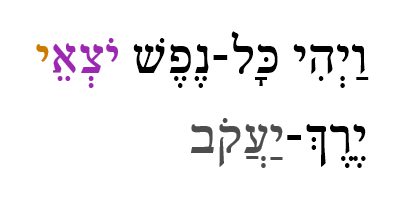
היהוַיְהִ֗יAnd was כלכׇּלall-נפשנֶ֛פֶשׁthe soul of יצאיֹצְאֵ֥יthe goers out of ירךיֶרֶךְthe thigh of- יַעֲקֹ֖בYaakov
The Shoresh, the prefixes and the suffixes each carry their own color, so the structure of the word is visible before a single word of translation is needed.
היהוַיְהִ֗יAnd was כלכׇּלall-נפשנֶ֛פֶשׁthe soul of יצאיֹצְאֵ֥יthe goers out of ירךיֶרֶךְthe thigh of- יַעֲקֹ֖בYaakov
Show everything, show one thing, or show nothing at all. Color the whole Chumash at once, or just the one word you are teaching right now.
The pieces were always there.
Start with the simple version and grow into the advanced one. Nothing has to be turned on until you want it.
One color for every prefix, one color for every suffix, and separate colors for verb Shorashim and noun Shorashim. Four ideas, and a beginner can start using them the same day.
שְׁמוֹת֙ בְּנֵ֣י הַבָּאִ֖ים
Split the colors apart: plural suffixes, past-tense suffixes, possessive suffixes, semichus, verb objects, and the Eytan prefixes each get their own color. Every occurrence in the Chumash lights up the same way.
וּבֵית֖וֹ בָּאוּ בְּנֵ֣י
Possessive, past tense and semichus — three different suffixes, three different colors.
Names of people and places can be highlighted on their own, so a student who stalls on an unfamiliar word knows immediately that there is nothing to translate — it is simply a name.
יִשְׂרָאֵ֔ל מִצְרָ֑יְמָה יַעֲקֹ֔ב
The Vav HaHipuch gets a color of its own — and so does the Eytan prefix beside it. Students stop reading past the one letter that flips the meaning of the whole verb.
וַיָּ֤מׇת יוֹסֵף֙ וְכׇל-אֶחָ֔יו
Shemos 1:6 — the Vav HaHipuch and the Eytan prefix, each in its own color.
Color every word on the page the same way, or reach in and color one single part of one single word. Teaching plural suffixes this week? Show only those, and leave the rest of the pasuk plain.
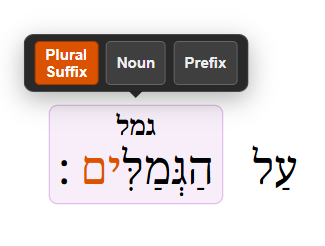
Nothing about the palette is fixed. Every Shoresh, prefix and suffix color can be set to whatever you want — match the colors your school already uses, work around a student who cannot tell red from green, or simply use the colors you like looking at.
Set them once and they hold across the whole Chumash. Try it right now in the panel at the top of this page.
וּבֵית֖וֹ בָּאוּ
Export a printable interlinear Chumash that keeps the full color coding, prints the Shoresh above each word, and gives a very literal, word-by-word translation underneath. Ready to hand out.
וְאֵ֗לֶּהAnd these are שםשְׁמוֹת֙(the) names of בןבְּנֵ֣יthe sons of יִשְׂרָאֵ֔לYisrael בואהַבָּאִ֖יםthe (ones) coming מִצְרָ֑יְמָהto Egypt אֵ֣ת- יַעֲקֹ֔בYaakov אישאִ֥ישׁ(each) man ביתוּבֵית֖וֹand his house בואבָּאוּ :they came
Shemos 1:1 — the whole pasuk, exactly as it exports.
The Shoresh line and the translation line are each optional, and each one can be switched off on its own. Print the full interlinear when you want everything in front of you, keep only the Shorashim for a lesson on structure, keep only the translation for a lesson on meaning, or leave the colored pasuk on its own for review.
וְאֵ֗לֶּהAnd these are שםשְׁמוֹת֙(the) names of בןבְּנֵ֣יthe sons of יִשְׂרָאֵ֔לYisrael בואהַבָּאִ֖יםthe (ones) coming מִצְרָ֑יְמָהto Egypt אֵ֣ת- יַעֲקֹ֔בYaakov אישאִ֥ישׁ(each) man ביתוּבֵית֖וֹand his house בואבָּאוּ :they came
Shemos 1:1 — the same pasuk, one layer at a time.
The same seforim serve a fourth grader, a beginner learning on his own, and a rebbi who has been teaching for thirty years.
A word stops being a wall the moment its parts are visible. Instead of waiting to be told what it means, a student can work it out.
The same Shorashim and the same suffixes come back again and again. Once you can see them, every word you learn makes the next one easier.
Show exactly the concept you are teaching, on exactly the words you choose. The color does the pointing so you can keep teaching.
A few ways teachers and learners are already using the color guided Chumash. This list will keep growing — send us yours.
Turn off every color except one — plural suffixes, say — and read through a whole perek. Students see the same ending appear on a dozen different words and the pattern lands on its own, without a single rule being memorized.
Learn a perek with full color. Then read the same perek plain and ask students to point out where the Shoresh ends. The gap between the two readings is exactly what they still need to work on.
Print the interlinear export for a perek the class already learned. With the Shoresh above each word, the skills get reviewed together with the teitch and the students will be able to move quickly and efficiently in their chazara.
Print a worksheet with the prefixes and suffixes left blank inside a black outline. Students fill in the colors themselves, turning a familiar pasuk into active practice.
Give students a pasuk in black text with a few word parts marked by highlighted backgrounds, like a highlighter. Leave the rest plain and have them continue with their own highlighters. At the end, share the fully highlighted answer on screen or hand out a completed printout so they can check their work.
Let students prepare the pesukim themselves with the help of the colors and the Shoresh above each word before you teach them. Or, give the pesukim in regular black text and highlight only the few words you know they will find difficult.
Send home the color-coded perek. A parent who is not comfortable with Hebrew can still follow along, because the structure of every word is right there on the page.
Show a page with only the Vav HaHipuch colored. Students immediately notice how often it appears and how consistently it does the same job — which makes the concept much easier to explain.
Have students collect every verb Shoresh on the page. Because the Shoresh is already marked, the exercise takes minutes instead of a whole period — and they can check their own work.
Give the plain version for a test and the colored version for preparation. You are measuring what the student can now see on his own, which is exactly the skill you were building.
Every word in these seforim was marked up by hand. With that much text, mistakes are certain — and the fastest way to fix them is for a learner to point one out.
If you spot a Shoresh that looks wrong, a suffix marked in the wrong place, or a translation that could be sharper, please tell us. If you have an idea for a feature or a better way to use the seforim in a classroom, we want that too.
Nothing is too small to send. Every correction improves the seforim for everyone who uses them afterward.
Or email directly: feedback@colorguidedchumash.org
Color Guided Chumash is being created for the entire Chumash. Every word is carefully edited and reviewed. It represents hundreds of hours of work and many expenses, and it is offered free to help Yidden learn Chumash.
Sponsorships keep the project free and moving forward. A perek, a parsha or a whole sefer can be dedicated l'ilui nishmas, as a zechus for a refuah shleima, or in honor of a rebbi, a simcha or a family.
Ask about sponsoringThere is real work to be done. Proofreading, reviewing Shorashim, checking translations, testing in a classroom and helping other schools get started all move this forward.
Offer to helpThe simplest help of all. Show it to a rebbi, a morah, a menahel or a parent who may find it helpful when learning with a child.
Share itOpen a perek and watch the words come apart. It costs nothing to try, and it may change the way a student sits down with a Chumash.